
Double-blind (default)
Author and reviewer identities are concealed from each other.
Author⇄Reviewer
Applied to most manuscripts
Every manuscript submitted to the Shibli National Academic Journal (SNAJ) goes through editorial screening and independent peer review before any publication decision is made.
Author and reviewer identities are concealed from each other.
Reviewers know the authors' identities, but reviewers stay anonymous to authors.
Authors submit an anonymised main manuscript and a separate title page with author details.
The editorial team checks scope, basic academic quality, formatting, and compliance with author guidelines. Identifying information is removed from the main file for double-blind review.
All manuscripts are screened with plagiarism-detection software. Manuscripts above the acceptable similarity threshold are returned or rejected.
Similarity limit: 10%Each manuscript goes to at least two independent reviewers with relevant subject expertise. Reviewers must declare any conflict of interest and decline if one exists.
Minimum 2 reviewersReviewers evaluate originality, methodology, validity of results, clarity, and relevance. All manuscripts and reviewer comments are treated as confidential.
2–4 weeksReviewers choose one of four outcomes, shown below.
Authors send a revised manuscript with a point-by-point response to reviewer comments. Revised manuscripts may go back to reviewers.
Within 7 daysThe Editor-in-Chief / Editorial Board makes the final decision based on reviewer reports. Editors do not handle manuscripts where they have a conflict of interest.
Accepted manuscripts are copyedited and proofread, and authors approve the proofs.
Articles are published online in open access with complete metadata and a Crossref DOI.
Authors who disagree with a decision can send a written appeal to the Editor-in-Chief with a detailed justification.
The Editorial Board reviews the appeal, and its decision is final.
Appeal within 7 daysComplaints: chiefeditor@snaj.org.in
SNAJ follows the COPE (Committee on Publication Ethics) guidelines on publication ethics and peer review.
COPE compliantThe Shibli National Academic Journal (SNAJ) is a multidisciplinary, multilingual, open-access, peer-reviewed national academic journal established under the aegis of Dept. of Teacher Education, Shibli National Post Graduate College, Azamgarh, Uttar Pradesh, India. SNAJ is committed to advancing knowledge across disciplines by providing a rigorous, transparent, and inclusive platform for scholars, researchers, practitioners, and academicians.
SNAJ is published in both print and online formats and maintains a robust digital presence through its official website www.snaj.org.in.
| Identifier | Details |
|---|---|
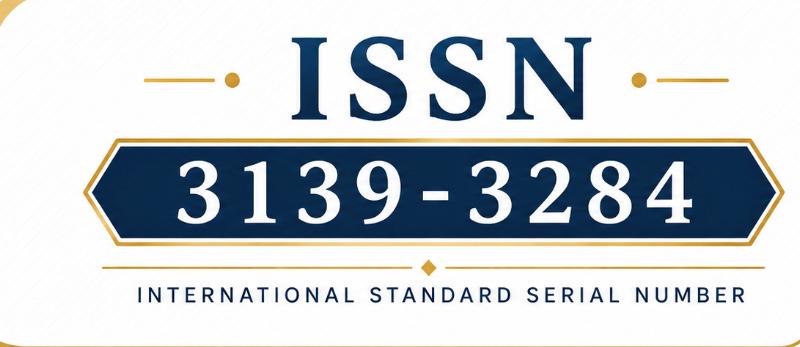
| ISSN (Online) | 3139-3284 |
| Publisher | Dept. of Teacher Education, Shibli National Post Graduate College, Azamgarh |
| Website | www.snaj.org.in |
| Chief Editor | Dr. Mohammad Zahid |
| Frequency | Bi-annual (January–June & July–December) |
| Language | English, Hindi, Urdu (Multilingual) |
| Access Model | Open Access (Diamond/Gold OA) |
| DOI | 10.68016 , Crossref |
Chief Editor: Dr. Mohammad Zahid | Email: chiefeditor@snaj.org.in
Institution: Dept. of Teacher Education, Shibli National Post Graduate College, Azamgarh – 276001, Uttar Pradesh, India
SNAJ was founded with the conviction that quality research should transcend institutional boundaries, linguistic barriers, and geographic limitations. The journal occupies a distinctive niche by publishing research in English, Hindi, and Urdu — making scholarly knowledge accessible to academics across India's diverse intellectual communities.
To be a leading national academic journal that fosters interdisciplinary research, upholds the highest standards of scholarly integrity, and bridges the gap between academic knowledge and societal application — inclusive of India's multilingual intellectual heritage.
SNAJ actively welcomes contributions from scholars regardless of gender, caste, religion, institutional affiliation, or geographic location. The journal is committed to publishing research that addresses issues of social justice, equity, and inclusion alongside mainstream disciplinary themes.
For the complete Editorial Policy Manual covering peer review, publication ethics, AI policy, authorship, copyright, and more, please contact the editorial office at chiefeditor@snaj.org.in.